
How to Plan SEO for
E-commerce Websites
Table of Contents
Online shopping is always exciting. Anything you want to purchase, you can find with just few clicks. The process of online shopping includes browsing, product shopping, checkout, and payment transactions. Unlike the conventional shopping method, e-shopping is very efficient and practical.
Online shopping helps us save time for product selection while also shortening the delay that is usually caused by the front desk of any supermarket like billing and packing. Not to mention, the time you spend traveling to the outlets.
For a successful online retail shop, it is very important to gain special attention from the customer’s viewpoint. Since the entire existence of the online store is purely digital, the only possible way to enhance the store’s appeal is to meet (reinforce) certain standards in terms of e-commerce SEO, site architecture, website aesthetics, backlinks, sitemap, and digital content. An online shop does not have a sales person explaining to you about the product, so it is necessary that a product page contains all the details that a customer could ever ask for.
What is Ecommerce SEO ?
eCommerce SEO is the process of optimizing the online store for search engine visibility and better ranking. These are aimed at ranking the store’s products when a consumer searches for the product, brand, or store online.
E-commerce SEO will help to build the genuineness, validity, and wide reach of your online shop. The SEO process should kick off with proper strategizing. eCommerce SEO strategy is the linchpin of any eCommerce website. From Keyword research to tracking analytics, it encompasses everything.
Advantages of Ecommerce SEO
When your online shop is optimized with e-commerce SEO techniques, it boosts the viewership and leads to a top position on the search engine. It is a cost-effective method to gain trust and to build traffic towards your online store. Other advantages of e-commerce SEO are :
Broad visibility of the website makes it easy for the customers to reach the site
Higher the chance of visitors to make the purchase
Organic results help to make the e-commerce site trustworthy among visitors
Attracts customers without paid ads and promotion
Call-to-action methods lead to immediate sales or urgent responses from the visitors.
Product-related informative content makes the visitor spend more time on the website.
Now, let’s get familiar with the best-proven SEO methods for e-commerce websites.
How to set up SEO for an ecommerce website.
There are certain specific SEO strategies for e-commerce websites mainly used to allure the customers or the potential buyers. Here we are going to analyze the most vital factors of e-commerce SEO strategy.
Keyword Research for ecommerce
The usage of the right keyword is a pivotal factor in website SEO optimization. The keywords of high relevancy and low competition can anchor your site into the search engine suggestions. Particularly for online sales, a slightly different approach should be taken towards keywords.
With some of the best e-commerce SEO keyword research tools available, it is easy to optimize your web pages with appropriate keywords. There are a variety of SEO keyword research tools like semrush, Ahref, Google Keyword Planner, etc.
You can easily search for high-ranking keywords to boost your site’s visibility and ranking among competitor websites. Now, let’s see how to approach keywords specifically for ecommerce SEO purposes.
Search Intent
The search intent of a keyword is simply the motive behind the user’s search attempt. It can be understood as the user’s objective with that particular search. We can categorize the search intent mainly into four types.
Navigational : search made for a particular webpage, login window, etc. eg: ” Facebook login” or “IELTS registration portal”
Commercial : search for product-related information before purchase. Eg: “best whey protein”
Transactional : searches with a direct intention of online purchase. Eg: “ buy laptops online”
Informational : searches that are meant to seek information about a topic. Eg: “how to learn acrobatics”
From these types of search intents, commercial and transactional search intents are highly associated with e-commerce sites for shopping purposes. So it is highly beneficial to reinforce them to increase visitor counts. SEO keyword research tools like semrush are highly useful for filtering user intent. Giving special importance to this user intent will help you ace online sales.
Long - Tailed Keywords
Long-tailed keywords have extensive scope for e-commerce SEO strategies. Long-tailed keywords are less competitive but garner higher conversions. The structure of a long-tailed keyword is similar to the search query itself. Additionally, it is more specific than the short keyword.
For example, “ best laptops for college students” or “organic vegetable shop near me” are more specific and similar to the format of the search query.
Various SEO keyword research tools are used to fetch long-tailed keywords related to the product or service. These keywords have the potential to meet what the customer is searching for. It is also a cost-effective method to boost traffic and thereby build credibility among customers.
Meta Title And Description

Meta titles and descriptions are short or encapsulated summaries of the page content that is displayed in the search engine results. Even though they appear as short descriptions of 150-160 characters, they hold a great opportunity for advertisement benefits. As an e-commerce SEO strategy, the meta description and title must be formulated with call-to-action phrases that invoke a sudden response from the visitor. For example, CTA phrases like “buy now”, “Add to cart”, and “purchase today” are highly useful to evoke a sense of urgency among the visitors.
Other ways to optimize meta description for e-commerce SEO :
Use concise words to describe the product. Usually, the long-tailed keywords are ideal for meta description. For example “long-lasting kitchen utilities” and “wooden room decors for Christmas”.
Include the benefit of the product related to its usage emphasizing its quality. E.g.:” Comfortable winter outfits for men” or “Delicious south Indian savory”.
Include sales promotional phrases of offers or seasonal discounts aiming a temporary incentive to the customer. It is an effective way to canvas new visitors to the website. Eg:“Shop now for 25% off”, “flat 30% off”, “combo discount offers” etc.
From these types of search intents, commercial and transactional search intents are highly associated with e-commerce sites for shopping purposes. So it is highly beneficial to reinforce them to increase visitor counts. SEO keyword research tools like semrush are highly useful for filtering user intent. Giving special importance to this user intent will help you ace online sales.
Product Details

Product presentation is an essential element in ecommerce marketing. From the user perspective, getting familiarized with the product through digital screens without direct visual tangible methods can be tricky. For an online retail store, it is important to present the product in terms of its dimensions, features, and other descriptions. Now, let’s see how products are displayed on most successful ecommerce sites.
Product name : sites like Amazon, and Flipkart optimize the product name with a relevant long-tailed keyword that concisely conveys the product information. E.g.: “ Stylish sneakers, casual shoes for men & boys”. Such long-tailed keywords can target niche demographics and foster the health of the ecommerce site.
Product description : The product description should contain detailed information about the product, its features, dimensions, and benefits. It must be treated with the standards of ecommerce SEO keywords while also providing flawless and easily readable description content.
Internal linking
Internal linking means linking another relevant webpage of the same website. It’s common that while browsing for a paintbrush in an online store, you will come across links for other art-related topics or products on the same website. Internal linking is an important factor in making your website more interesting and facilitates a prolonged engagement of visitors. With internal linking strategy, Users can easily navigate to the relevant products or pages within the same site without a secondary attempt for product search.
Url structure
Webpage URL is the digital identity of the page that helps the search engine to identify the page content. It is more like an address of the webpage. What is the role of URL in ecommerce seo? Suppose you want to search for casual shoes in green color. The search results will likely provide the page with the URL labeled with green color casual shoes. Such URL labels are called slug, that contain specific details of the product for improving the search engine results.
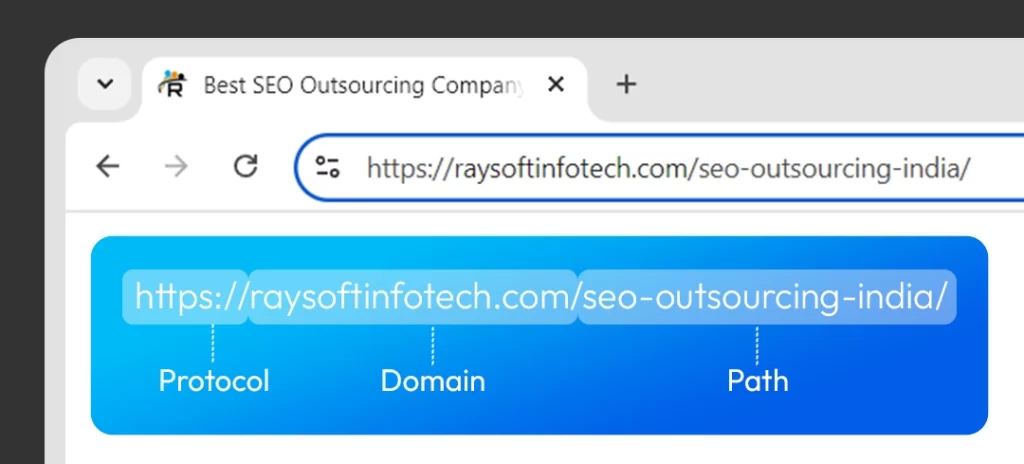
URLs for ecommerce web pages must be set with SEO keywords so that the search engine bots will find it easy to spot them. URL keyword optimization also helps you to outrank the sites with unoptimized URLs.
Image optimization
Generally, it is the image on the website that takes time to render. Image optimization is the method of reducing image size for fast loading without compromising the quality of the image. Furthermore, certain seo image optimization methods can be implemented for the search engine to understand the context of the site.
The SEO image optimization method is used to label additional metadata to the images so that the search engine can easily interpret them.
Alt text : setting descriptive alt text for the images can highly improve the promotion of your online store. The search engine indexes the image based on the alt text. The image description given as alternative text is also useful for visually impaired users. Moreover, it is also useful when image rendering is poor or broken.
Image file name : Assigning the proper name to the image file is an advantage for your ecommerce website. Such names given with seo strategies make it easy for the search engine to spot the site niche while also making your online store more discoverable.
Schema Markup
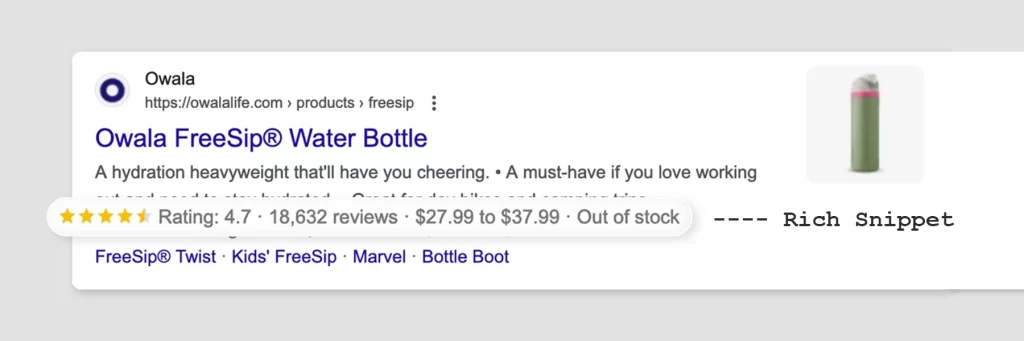
Schemas markup appears like an add-on snippet of the webpage in the search results. It is used to display additional information like customer ratings, price, images, shipping information, and availability. Optimizing your ecommerce seo with schema markup not only adds rich info tags to your site but also makes the search engine easy to understand the content in it.
There are varieties of schema markup types. Each catering to the type of the site. Google has 35 manifolds of schema markups. However, for the purpose of ecommerce seo, schema markups such as product markup and review markup are extensively used.
There are several tools like Google’s Structured Markup Schema Helper tool for easy implementation of schema markups for your ecommerce seo strategies.
Website Layout and Page - Wise Categorization
One of the main advantages of online shopping is the ease of product browsing. For a smooth and flawless use of the online shop from the customer side, the page navigation must be simple and functional. That is, if the product is hard to find, less chance of purchase leading to an unsatisfied browsing experience.
Just like a supermarket, you can simply search for the products in the related category. For example, apples are found in the fruits section, and skin lotion is found in the skincare section. In an ecommerce website, you can navigate to the category page to spot a product or it can be accessed using the search prompt.
Responsive Web Design
Since the majority of users access the online shopping site from their mobile phones or tablets, the layout should not compromise with the device type and affect the shopping experience. The website user interface must be made responsive to all types of devices without compromising the navigational features as well as its simplicity.
A perfectly organized categorization of products has to be ensured without compromising the site speed.
A clean and simple website layout improves user experience, making the visitors into potential buyers.
Intuitive navigation with search prompts and filter options enhances the shopping experience.
Responsive web design to make the e-shopping site compatible to all types of devices.
Simple categorization and in-page navigation for reducing confusion and complexities.
Websites aesthetic and mood, composed of the colors, graphics, and text styles to improve the product display and appeal.
Backlinks
Backlinks play a crucial role in e-commerce seo strategy. It also boosts the promotion whenever your ecommerce site appears from other relevant sites, guest blog posts, or product review websites. Building trustworthy backlinks is proven to be highly beneficial for the best SERP ranking. Backlinks from other websites have an affirmative nature that builds trust among visitors. For ecommerce websites, you can easily gain backlinks from healthy and trusted sites.
Ecommerce websites can generate links through collaborative projects or association with other businesses.
Informative content from high-quality industrial websites.
Association with guest blogs that focus on specific products.
Featuring your products or getting reviewed from other websites.
Links from social media with an intention to promote or feature the products.
Ecommerce Platforms

Ecommerce platforms are used to build and maintain ecommerce websites. Some of the best ecommerce platforms like Shopify, Squarespace, Woocommerce, and BigCommerce are being extensively used for online shopping sites. These ecommerce platforms also offer centralized control of your online shop and virtual assets. They are useful not only for managing product catalogs, inventory, transactions, payment gateways, and shipping but also for maintaining the industrial standards of e-commerce.
Most of them are beginner-friendly to operate and eliminate the need for a computer degree and proficiency in graphics. However, some ecommerce platforms like Shopify and woocommerce can be also used for advanced dive-in. Based on the scale of the ecommerce these platforms can be opted to meet the requirements.
Benefits of ecommerce platforms:
Reliable speed
Easy management of the site.
Flexible customization options.
Ecommerce Seo implementation.
Extensive plugins to tailor various ecommerce requirements.
Secured payment transaction
Overall, Ecommerce SEO gives promising results when formulated and implemented strategically. It also equips the online store with a professional and trustworthy appeal, improving business leads and enhancing the customer-business interaction.
Recent Post
-
 WhatsApp Business Marketing: The Most Underrated Growth Tool for Small Businesses in 2026SEO
 -
 Short-Form Video SEO: How to Rank Your Reels and TikToks on Google in 2026SEO
 -
 The Rise of Zero-Click Searches: What It Means for Brands in 2026SEO
 -
 Micro Interactions and Motion BrandingSEO
 -
 Digital Transformation for Small Businesses: A Step-by-Step Guide to Building Your Online PresenceWeb Development